Home Loans in Cedar Park With a Closing Date You Can Plan Around
We arrange home loans across Cedar Park, Leander and Round Rock. That covers conventional, FHA, VA and USDA purchase loans, HELOCs for owners with equity, and bank statement, hard money and bridge financing when income or timing falls outside a standard file. You get a written timeline to closing and a call from your loan officer when a date moves.
- Written timeline to closing
- Updates when dates move
- Rate quotes by phone
- Eight loan programs

Loan Programs for Buyers, Owners and Investors
Each program has its own rules for down payment, credit, mortgage insurance and paperwork, and those rules decide how long the file takes. Conventional loans, FHA loans, VA loans and USDA loans cover most purchases and rate-and-term refinances. A HELOC opens a line of credit against the equity you already have. Bank statement loans, hard money loans and bridge loans handle income or timing that a standard file cannot.

Conventional Loans
Fannie Mae and Freddie Mac financing for buyers with steady income and decent credit, with PMI that comes off as your equity grows.

FHA Loans
Low down payment home loans backed by the FHA, with room for thinner credit and a dated plan that runs from pre-approval through appraisal to your closing day.

VA Loans
Home loans for veterans, service members and eligible spouses, with no required down payment and no monthly mortgage insurance, closed on a schedule you can plan around.
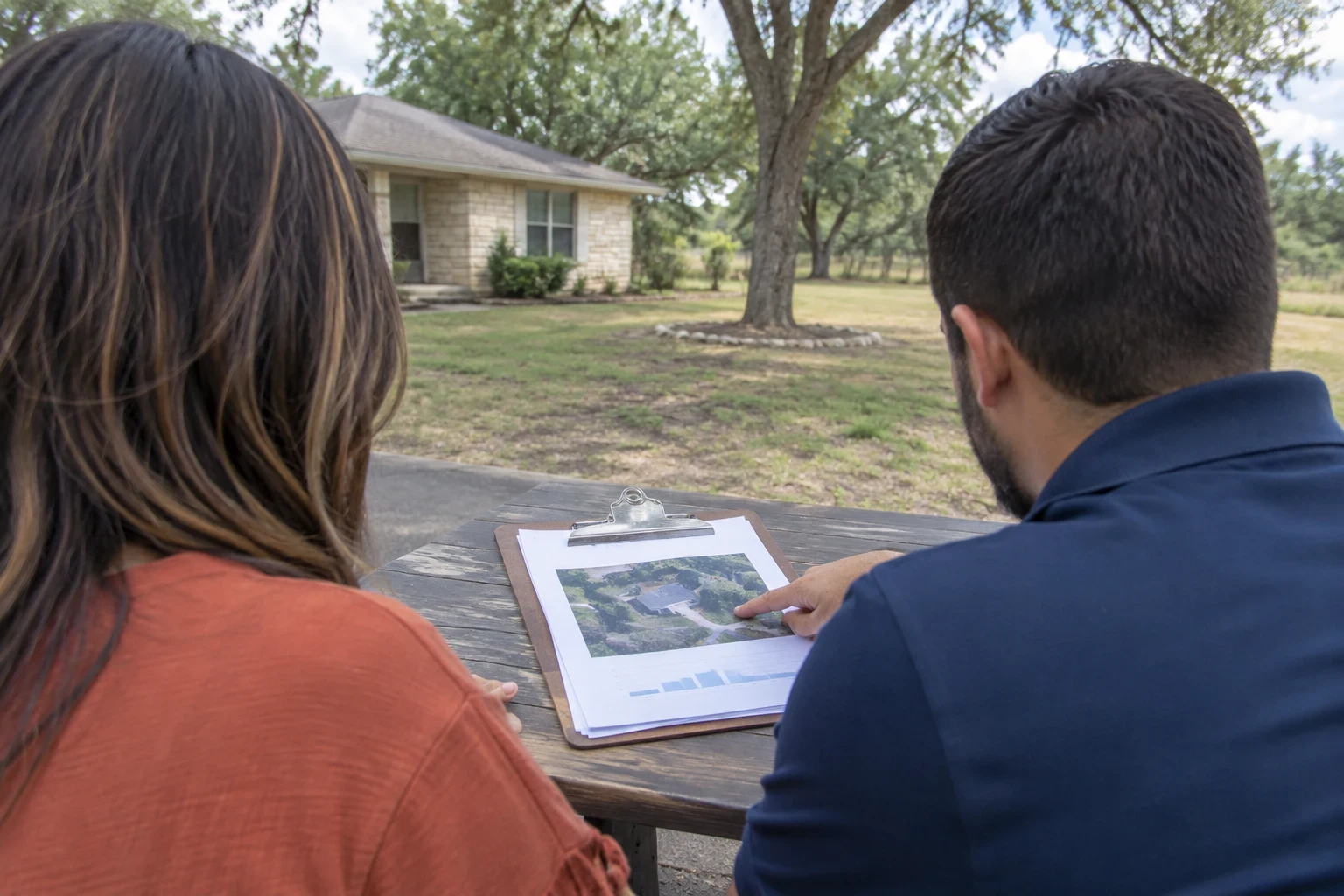
USDA Loans
No-down-payment financing for eligible addresses and moderate incomes, with the address, income and USDA review steps checked before you make an offer.

HELOC
A home equity line of credit you can draw on as needed, with the Texas waiting periods mapped out before you apply so you know when funds are usable.

Hard Money Loans
Short-term, asset-based financing for investors buying and renovating property, with a closing schedule we lay out step by step before you commit.

Bank Statement Loans
A home loan for self-employed borrowers that measures income from 12 or 24 months of bank deposits rather than the net income on a tax return.

Bridge Loans
Short-term financing that taps equity in the property you own now so you can close on the next one before the first one sells.
What Sets Your Rate and Closing Costs
Two borrowers can ask for the same loan amount on the same morning and walk away with different rates. A lender prices each loan by how much risk the eventual investor sees in it, then adds third-party charges such as the appraisal, title policy and county recording. Property taxes and hazard insurance collected through escrow add heavily to the monthly payment in Cedar Park, so every quote we give includes them.
We will not hand you a rate until we know the facts that drive it. Once your application is complete, a Loan Estimate arrives within three business days showing the rate, points and every closing cost line by line, ready to set beside any competing offer.
- Credit score and history
- Rates are priced in score tiers, so a handful of points can change your number. Late payments in the last year, maxed-out cards and open collections count too. If paying down one balance could lift you into a better tier, we point that out before you apply.
- Down payment and loan-to-value
- The thinner your equity, the more risk the lender carries. A conventional loan with under 20 percent down normally comes with private mortgage insurance, and that premium rises or falls with your score and the size of your down payment.
- Loan program
- An FHA loan charges mortgage insurance twice: a one-time premium at closing and a yearly premium spread across your monthly payments. Most VA borrowers owe a funding fee, though veterans with a qualifying service-connected disability rating skip it. USDA loans add a guarantee fee of their own. Each one shifts your real cost in a way the rate by itself will not show.
- Rate lock length
- A longer lock shields you from market moves for more days, and that protection usually costs a little in price. Quote the same loan with a 30-day lock and a 60-day lock and the numbers will differ.
- Points and lender credits
- Paying discount points at closing buys a lower rate. Accepting a slightly higher rate can instead earn a credit that covers part of your closing costs. We lay out both options so you can pick based on how many years you expect to hold the loan.
- Occupancy and property type
- A primary residence prices better than a second home or a rental bought for investment. Condos, two- to four-unit buildings and acreage can trigger added underwriting conditions or pricing adjustments.
Where We Lend
We arrange home loans in Cedar Park and nearby towns including Leander, Brushy Creek, Round Rock, Wells Branch and Pflugerville. We also work with borrowers buying or refinancing in Hudson Bend, Steiner Ranch, Jonestown, Georgetown and Liberty Hill. Because applications, disclosures and most meetings can happen by phone or video, distance rarely slows a file down.
- Cedar Park
- Leander
- Brushy Creek
- Round Rock
- Wells Branch
- Hudson Bend
- Jonestown
- Georgetown
- Pflugerville
- Steiner Ranch
- Liberty Hill
USDA eligibility depends on the exact property address, so we check the map for any rural or edge-of-town property before you make an offer.
How We Keep a Loan on Schedule
Most closing delays come from three places: a missing document, a late appraisal or a title issue nobody flagged. We plan for all of them before you sign a contract, not after.
Dated milestones, not a guess
After your application, we map each milestone against your contract's closing date: appraisal order, title commitment, underwriting submission, clear to close. If the dates look tight for your loan program, we say so at the start so you can negotiate a longer contract period instead of scrambling later.
One document list, up front
We send the full list on day one, matched to your income type. W-2 borrowers, retirees, veterans and business owners each need different paperwork, and getting it all at once avoids the stop-and-start requests that push a file back in the underwriting queue.
A call when something changes
If the appraisal comes in low, an underwriter asks for a letter of explanation or the title company finds an old lien, your loan officer calls you and your agent the same way. You hear what changed, what it does to the closing date and what we need from you.
Rate locks sized to your closing
Letting a lock run out before you reach the closing table means paying a fee to stretch it. We choose the lock period from your dated milestones and show you what a longer one would add before you commit.
Phone, video or our office
Application review, disclosure walkthroughs and pre-closing questions can happen by phone or video, so a meeting does not have to wait for a free afternoon. If you would rather sit down in person, we set that up too.

A Mortgage Office That Plans Backward From Your Closing Date
We are a mortgage lender working with buyers, veterans, self-employed borrowers, investors and owners looking to refinance or use their equity across Cedar Park and the surrounding area. Our work happens at our office, or by phone and video when that fits your week better.
The way we run a file is simple. We start with the date you need to close, count backward through appraisal, title and underwriting, and tell you plainly whether those dates hold. When something shifts, and in mortgages something usually does, you hear it from your loan officer along with the new date and the next step.
- License
- NMLS licensed for 10 years
Questions Borrowers Ask Us
- How long does it take to close a home loan?
- That depends on your loan program, the appraiser's schedule and how complete your paperwork is on day one. VA and USDA files carry extra review steps, while investor and bridge loans run on their own timelines. We build a dated plan around the closing date in your contract and flag it early if the window looks short, so you can negotiate more time before signing.
- How much do I need for a down payment?
- Qualifying buyers can put as little as 3 percent down on some conventional programs. FHA loans call for 3.5 percent when your credit score is 580 or above. Eligible borrowers buying eligible properties can use VA loans and USDA loans with nothing down. Closing costs and any required reserves still need to be covered, and we estimate those in your quote.
- What is the difference between pre-qualification and pre-approval?
- A pre-qualification takes the income, debt and credit figures you share with us at face value and gives a working number. A pre-approval comes after we pull your credit report and check your pay stubs, tax returns or bank statements against it. Listing agents and sellers treat a pre-approval letter as far stronger evidence when they weigh competing offers.
- Will getting a rate quote affect my credit?
- No credit check is needed for a phone rate quote; we work from the figures you give us. Credit gets pulled only once you choose to apply, and we let you know first. Scoring models generally count several mortgage inquiries made within a short shopping period as one.
- I'm self-employed. Can I still qualify?
- Often, yes, once the program matches how you earn. Strong income on your tax returns can support a conventional or FHA loan. If deductions pull your taxable income down, a bank statement loan sets the returns aside and calculates income from deposits across one to two years of personal or business statements.
- Why does a Texas home equity loan or HELOC take longer?
- Texas adds rules most states do not have. You must wait 12 days after receiving the required notice before closing, total borrowing against the property cannot exceed 80 percent of its value, and you keep a three-day right to cancel after you sign. We build all of that into your timeline from the first call.
- What happens if my closing date has to move?
- We call you and your agent as soon as we learn of it, explain why and set a new target date. If the new date runs past your rate lock, you hear the extension cost before any charge, and we check whether a shorter extension would do the job.
From First Call to Closing Table
Here is what happens, in order, and roughly where the waiting usually sits.
- 1
Rate quote and pre-qualification by phone
You tell us the price range, down payment, income type and rough credit picture. We quote a rate for that scenario, point you to the program that fits and explain what pre-qualification does and does not mean to a seller.
- 2
Application and pre-approval
With your permission we pull credit and review the documents. An underwriter-ready pre-approval letter lets your agent write offers with a real number behind them.
- 3
Contract, appraisal and underwriting
Once you are under contract, we lock the rate, order the appraisal and send the file to underwriting. The appraiser's visit and the underwriter's conditions are where most of the waiting happens, and we give you dates for both as soon as we have them.
- 4
Closing Disclosure and closing
Federal rules give you a minimum of three business days with the Closing Disclosure in hand before signing day. Your loan officer compares every figure on it with your Loan Estimate and explains any change. Then you sign at the title company and receive keys or funds per your contract.
Know Your Rate and Your Timeline Before You Make an Offer
Tell us your price range and target closing date. We will quote a rate for your scenario and lay out the steps between today and the closing table.